
The History of the Corvette
 If you've been following us on a regular basis you know we are 15 years into the history of the Chevrolet Corvette, a pre-celebration of the 50th Anniversary soon to arrive in 2003. This month we take a look at the third generation, C3 Corvettes. By 1967 the Corvette was a winner at just about every level as far as sportscars were concerned. It had few competitors in any case, and none anywhere near as good looking. The new model, based mainly on the Mako Shark Concept car was finally released and in the eyes of most, prematurely. The '68 model met with so many complaints in the areas of design and quality control that Car an Driver magazine claimed it wasn't even good enough to warrant a test. These problems however did not bother the consumer base, as sales increased by almost 25% over the previous model.
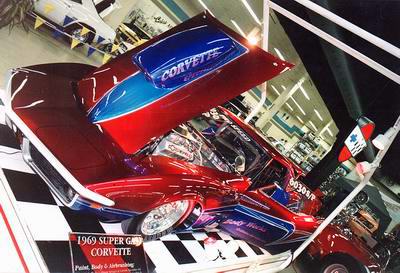 For 1969 the little problems were alleviated and sales increased another 35%. The name Stingray returned so that Chevrolet could ride the coat tails of their prominent history, although the new model was totally different. The new model shared many characteristics with its predecessors, but new additions such as pop up vacuum headlights, removable t-roof panels and rear window and of course those remarkable front fenders were all items that gave the car its image. Choice continued with several engine options in addition to a very long list of creature features allowing the consumer to basically hand choose the way his Corvette would be built, right down to the rear axle ratio. Popular choices, if one could afford it, were the 427 V8 big blocks in 390, 400, 435 and 430HP designations. The latter 430hp was the famous L88. A significant down rating and high price tag deterred the public from purchase. These cars were actually producing close to 600hp in the late '69 versions and could be operated on 103 octane only. These were production racecars and ended up thankfully in the hands of only racers, in most cases, which led to the victorious history these cars created on racetracks around the world. It was taken a step further when the ZL-1, an aluminum 427 was designed, but production was held to only two units. The seventies saw more minor refinements but with the fuel crisis on, the muscle car era had ended. The last hurrah came in small block wizardry when the 350ci V8 was introduced and in 1970 eventually pumped to 370HP in the solid lifter LT-1 option. These numbers would soon decline as compression ratios were on the way down and emission restrictions were on the rise.
 Production numbers continued to increase and the shift to a "luxury sports car" had proved successful. The image was changed with the removal of the chrome bumpers in exchange for 5 mph body colour bumpers with a urethane plastic skin. Horsepower hit an all time low in 1975, as far as advertised numbers were concerned. The base L-48 was at 165 hp and its hi-performance sibling the L82 came in at 205hp. These two engines were offered until 1980, and then in 1981 they scaled downed to just one available engine. The production of the convertible had declined to only 4,629 units in 1975, the final year it was available. The fast back rear window arrived in 1978, a year in which Corvette offered a special 25th Anniversary edition, as well as the very sought after Indy Pace Car replica Edition.
The last body changes arrived in 1980 when they integrated front & rear spoilers that were previously introduced on the Pace Car, and in '79 as an option. To this day, the 80-82 body has remained as one of the sexiest looks that Chevrolet ever produced and it shows in their value. They can sell for their original MSRP or even more if their condition has been maintained or restored, definitely an investment tip for the future.
For the final year of production power train was completely refined when Chevrolet re-introduced fuel injection. The L83 was equipped with cross fire injection and produced 200hp in front of a new four speed automatic transmission, the only choice available. The era of the C3 ended with a special edition deemed as the Collector Edition, a fully loaded car with special paint, interior, and a lifting rear hatch glass. These are truly a beautiful car and have come to be quite collectible, despite their young vintage. Next month we take technology by the hand and move on to the C4.


